


Tel: +86-131-8042-1118
E-mail:
E-mail:
26 Huanghai Road, Leting Economic Development Zone, Hebei Province, China


Views: 0 Author: Site Editor Publish Time: 2026-06-26 Origin: Site


The construction industry is shifting rapidly. Traditional manual methods are stepping aside. Modern modular solutions now drive both project profitability and site safety. A Ringlock Scaffolding System represents this evolution perfectly. We define it as a highly modular, prefabricated steel framework. It relies entirely on a unique rosette-and-wedge connection mechanism. This precise design eliminates loose fittings and guesswork on site.
Our comprehensive guide evaluates these systems closely. We will examine structural mechanics and outline core components. We will also explore comparative advantages against older methods. Finally, we will outline strict procurement criteria. This information empowers contractors and project managers. You can make highly informed sourcing decisions for your fleet. You will learn how modular setups reduce labor hours drastically. You will see how they safely navigate complex building geometries. Read on to master the fundamentals of modern site access.
Ringlock is a highly adaptable, load-bearing modular scaffolding system recognized for its distinctive 8-point rosette connection.
Its design significantly reduces erection and dismantling labor costs compared to traditional tube-and-clamp setups.
Evaluating a Ringlock scaffolding system requires verifying steel grades (e.g., Q345/Q235), galvanization standards, and compliance with regional safety codes (OSHA, EN 12810/12811).
While initial capital expenditure is higher, Ringlock delivers measurable ROI on complex industrial, commercial, and event structures through speed and geometric flexibility.
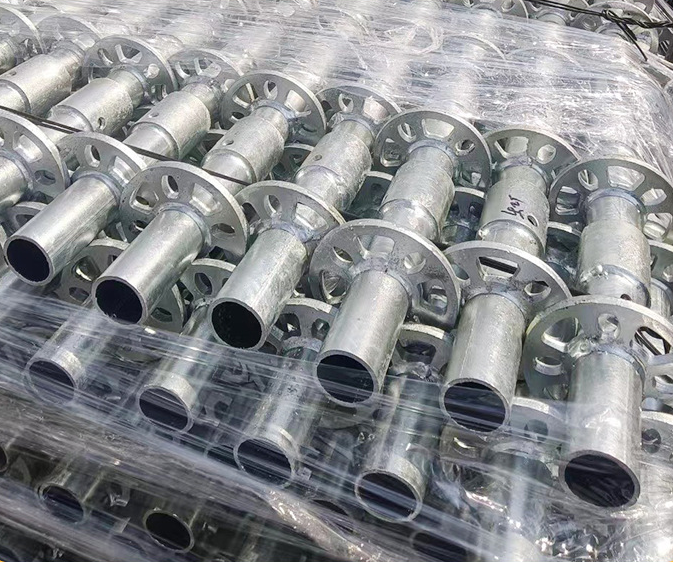
Understanding this framework requires looking at its core engineering. The rosette node design is the central feature here. Manufacturers weld a high-strength steel rosette to vertical standards. They typically place these nodes every 0.5 meters. This specific frequency gives builders immense vertical flexibility. You can place working decks at highly precise elevations. This keeps workers in ergonomic positions.
Next, consider the impressive 8-point connectivity. Each individual rosette allows up to eight independent connections. Four small openings sit at strict 90-degree angles. Four larger openings sit at 45-degree angles. This geometry proves incredibly useful in the real world. You can easily configure circular shapes. You can wrap around curved industrial tanks. You can even build suspended structures safely.
The captive wedge-lock mechanism secures the entire framework. It uses a smart captive pin system. This means workers no longer drop nuts or lose bolts. A worker simply slides the ledger head onto the rosette. They align the slot over the chosen opening. They then drop the captive wedge through the hole. A simple hammer blow locks it tightly in place.
This single hammer strike establishes a rigid node. The joint becomes self-plumbing immediately. It aligns automatically under tension. This brilliant physics trick saves crucial assembly time. The wedge taper pulls the ledger tightly against the vertical standard. This friction grip prevents unwanted swaying. It ensures maximum rigidity across the entire elevation.
A functional Scaffolding System relies on several distinct components working together smoothly. Each part performs a highly specific load-bearing function. You must understand these elements to plan a safe build.
These are the primary load-bearing tubes. They transfer all structural weight down to the ground. They feature the welded rosettes spaced at regular intervals. Standard tube diameters usually measure 48.3mm. Wall thicknesses vary but typically measure 3.2mm for heavy-duty applications. Built-in spigot connections sit at the top. These allow seamless vertical stacking as your structure grows.
Horizontal ledgers provide essential lateral support. They connect uprights together to form rigid bays. They also support the scaffold planks directly. Tubular O-ledgers support standard metal planks. U-ledgers feature a U-shaped profile. They secure specific decks firmly in place. You will notice heavy-duty wedge heads welded at each end.
Structures need sheer rigidity to survive high winds. Diagonal braces handle this job perfectly. They connect from one rosette down to another rosette across different elevations. This diagonal tension prevents structural swaying. It squares the scaffold tower automatically. You must install them at regular intervals based on engineering guidelines.
Every safe structure starts at the ground level. Base collars and screw jacks form this foundation. Screw jacks accommodate uneven terrain easily. You can adjust them precisely to level the base. Base collars slip over the jacks. They provide the very first rosette connection point. This transfers the entire scaffold load to the ground securely.
Workers need safe operational surfaces. Steel planks and aluminum decks create these walking paths. They lock safely onto the horizontal ledgers. Toe boards surround the deck perimeters. They prevent tools and debris from falling off the edge. This protects personnel walking below the work zone.
Inspect wedge pins daily for bending or severe rust.
Never force a wedge into a rosette using excessive force.
Clear concrete or mortar debris from rosette holes immediately.
Always install toe boards on every active working level.
Contractors constantly look for ways to improve profit margins. Equipment selection plays a massive role in project economics. This modular approach offers several compelling business advantages.
The modular design cuts assembly time drastically. Workers rely entirely on predetermined nodal points. They avoid measuring distances manually. They skip tightening loose couplers. Time-to-erect directly dictates your overall labor budgets. Faster assembly boosts site profitability significantly. You can dismantle the structure equally fast. This keeps project schedules moving smoothly.
Heavy industries demand serious structural integrity. Ringlock transfers loads concentrically right at the rosette. This prevents dangerous eccentric stress on the joints. The vertical standards absorb the weight cleanly. It easily supports heavy-duty masonry blocks. Industrial shoring relies heavily on it. Offshore platforms benefit from its robust strength. You can pour thick concrete slabs safely above it.
Modern building facades are rarely simple rectangles. Obstructions exist on almost every job site. This system navigates difficult corners easily. You can build around cylindrical storage tanks seamlessly. The 45-degree rosette slots make this possible. You rarely need expensive custom fabrication. You bypass architectural quirks without slowing down the build.
Equipment longevity matters greatly to fleet owners. Most premium modular systems use hot-dip galvanization. Manufacturers dip the raw steel into molten zinc. This creates a thick metallurgical bond. The zinc coating protects the steel inside and out. It drastically reduces maintenance needs over time. You can depreciate the equipment over many years. This provides a tremendous return on investment.
Choosing the right inventory requires comparing available options. Not all frameworks offer the same versatility. Let us contrast the top contenders in the current market.
Cuplock remains a popular choice globally. It uses a sliding top cup and a fixed bottom cup. Workers drop ledger blades into the bottom cup. They hammer the top cup down to lock them. However, Cuplock primarily locks connections at rigid 90-degree intervals. Ringlock uses the sophisticated 8-point rosette. This enables complex 45-degree angles instantly. Ringlock handles non-rectangular geometry far better than Cuplock.
Tube-and-clamp setups are undeniably versatile. You can place a tube anywhere. However, they require extensive skilled labor. Workers must constantly measure distances between uprights. They must verify coupler torque continuously using wrenches. Ringlock provides total modular predictability. It replaces slow, manual checks. A simple hammer blow confirms the connection. This makes it the absolute standard for large-scale operations.
Feature / System | Ringlock | Cuplock | Tube-and-Clamp |
|---|---|---|---|
Connection Style | Rosette and captive wedge pin | Top sliding cup and bottom fixed cup | Loose bolted couplers and clamps |
Geometric Flexibility | Excellent (8-point, 45° and 90° angles) | Moderate (Primarily 90° angles) | Maximum (Infinite angles possible) |
Assembly Speed | Very High (Self-plumbing nodes) | High | Low (Requires manual measuring) |
Skill Level Required | Moderate (Intuitive modular design) | Moderate | Very High (Strict torque monitoring) |
Sourcing large volumes of steel equipment carries risk. You must vet manufacturers carefully. Substandard steel threatens human lives directly. Follow these procurement guidelines to protect your workforce and your investment.
Always verify the raw steel grade before buying. High-load standards demand high-strength structural steel. Q345 or S355 grade steel is ideal. Avoid standard mild steel like Q235 for load-bearing uprights. High-grade steel ensures superior weight-to-yield ratios. It resists buckling under heavy concrete pours. Ask suppliers for raw material mill certificates.
Hot-dip galvanization is the modern industry standard. Painted finishes scratch easily during transport. Rust compromises structural integrity quickly. Galvanization prevents internal and external corrosion effectively. The molten zinc coats the inside of the tubes perfectly. This treatment is vital for harsh coastal environments. It also resists chemical exposure in refineries.
Never skip document verification during procurement. Request third-party load test reports immediately. Insist on formal compliance certificates from recognized labs. Look for ANSI/ASSP A10.8 compliance in North America. Check European standard EN 12810 and EN 12811 compliance carefully. OSHA alignment is non-negotiable for US projects. Verified engineering data protects you from severe legal liability.
Avoid proprietary dimensional variations if possible. Stick to standard metric or imperial dimensional footprints. This allows seamless inventory expansion later. You can mix rentals during unexpected project peaks. Proprietary spigot sizes trap you with one vendor. Ensure your chosen system matches general industry sizing.
Accepting electro-galvanized finishes instead of true hot-dip galvanization.
Ignoring the wall thickness tolerances on vertical standards.
Failing to request independent yield strength tests for the rosette welds.
Mixing imperial and metric bay lengths unknowingly on site.
This modular framework is a premier engineering solution. It brilliantly balances high load capacity, geometric adaptability, and remarkable labor efficiency. The rosette-and-wedge design solves decades of site frustrations. It eliminates loose parts and guarantees node rigidity.
The upfront capital requirement for this inventory is notable. However, the drastic reduction in labor hours compensates quickly. Improved safety metrics protect your workforce from fall hazards. Faster erection times accelerate entire project schedules. These factors maximize long-term profitability for mid-to-large contractors. The shift away from manual clamping is inevitable and highly beneficial.
Do not settle for substandard site access solutions. Review your upcoming project blueprints today. Request technical specifications and engineering load charts from your supplier. Secure a precise component quote to elevate your next major build. Equip your teams with the safest tools available.
A: The safe working load limit depends on bay size, component length, and the specific steel grade. Engineers generally classify it for heavy-duty applications. Always refer to manufacturer-specific engineering load charts. Never guess capacities on site.
A: It is generally not natively compatible with Cuplock or Frame systems due to different nodes. However, standard tube-and-clamp components can be integrated using specialized couplers. This helps handle unique architectural bypasses easily.
A: With proper handling and dry storage, these galvanized systems often exceed 15 to 20 years of operational life. The thick zinc coating heavily outlasts painted alternatives by preventing internal tube corrosion.
A: While the modular design is intuitive, erection must still be overseen by a designated "competent person." This aligns with OSHA and local guidelines. A trained supervisor ensures base stability and proper tie-in compliance.


