


Tel: +86-131-8042-1118
E-mail:
E-mail:
26 Huanghai Road, Leting Economic Development Zone, Hebei Province, China


Views: 0 Author: Site Editor Publish Time: 2026-06-16 Origin: Site


In commercial and industrial construction, unpredictable erection times routinely destroy project margins. Labor shortages complicate staffing requirements severely. Severe safety liabilities also threaten everyday operations on site. Framing complex site geometries requires absolute precision. Traditional tube-and-fitting setups often fail to meet these high demands. They leave project managers guessing on vital labor calculations. Moving away from these outdated methods requires investing in modular solutions. However, procurement teams must look past basic product definitions. They need to thoroughly evaluate structural suitability. They must assess lifecycle returns and strict compliance metrics. This guide provides project managers, estimators, and safety directors a rigorous framework. You will learn how to evaluate and shortlist the right modular access equipment. We will explore site geometries, load capacities, and logistical hurdles. By understanding these specific variables, you can confidently select the ideal solution. You can protect your workforce while driving profound project efficiency.
A true system scaffold is defined by fixed, prefabricated connection points that remove guesswork, reduce human error, and standardize erection times.
The Ringlock Scaffolding System offers maximum geometric flexibility and load capacity, but carries different weight and capital cost implications compared to Cuplock or Kwikstage.
Safe deployment requires strict adherence to manufacturer load data and OSHA regulations (e.g., 1926.450), particularly regarding the mixing of components from different manufacturers.
Procurement decisions should be weighted equally between initial material costs, labor velocity, and long-term inventory management realities.
Let us unpack the defining structural characteristics. A true modular Scaffolding System relies on precise factory engineering. It features prefabricated components like standard vertical tubes, horizontal ledgers, and transoms. These parts interlock precisely at fixed node points. Traditional scaffolding relies heavily on manual placement using loose couplers. Loose couplers introduce significant human error into the building process. Prefabricated nodes eliminate this dangerous variability entirely.
The business value of standardization is immense. You can achieve highly predictable labor calculations immediately. Fixed nodes mean estimators can accurately calculate erection velocity per cubic meter. Project managers finally gain reliable scheduling data. Furthermore, modular designs reduce intense skill dependency. You still require a certified competent person for legal erection. However, the interlocking design lowers the barrier to entry for general crew members. Less experienced workers can assist more safely compared to tube-and-fitting setups.
Structural integrity improves drastically alongside erection speed. Wedged or cup-locked nodes create exceptionally rigid joints. These high-load-bearing connections inherently resist strong vibrations. They also minimize sway during severe wind events. Enhanced rigidity directly translates to increased worker confidence. A stable platform accelerates productivity at extreme heights. You eliminate the constant manual tightening required by loose couplers. Fixed node points ensure the structure remains perfectly plumb and square.
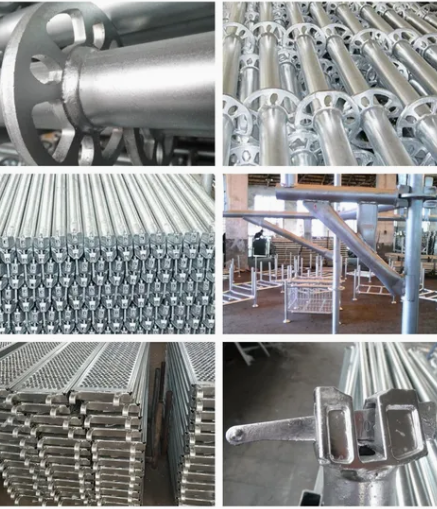
We must analyze the major industry categories carefully. You will typically choose between Ringlock, Cuplock, and Kwikstage. Each offers unique geometric benefits and specific structural trade-offs.
The Ringlock Scaffolding System stands as the global leader for versatility. It features a central rosette design. This rosette allows up to eight connections at various complex angles. You can build complex, non-linear geometries easily. It handles circular tanks, industrial facilities, and curved facades perfectly. It also easily meets extreme heavy-duty load requirements. However, you must consider the trade-offs. Ringlock requires a higher initial capital investment. The individual structural components are also slightly heavier.
Cuplock systems serve a distinctly different primary function. Their design utilizes a unique vertical node point. A single action locks up to four horizontal members using a top and bottom cup. This locking mechanism makes erection incredibly fast. Cuplock is best suited for highly repetitive tasks. Straight-line commercial builds benefit greatly from this speed. The main trade-off is reduced angular flexibility. You cannot adapt Cuplock to curved structures as seamlessly as Ringlock.
Kwikstage systems offer another viable modular alternative. They utilize V-pressings and wedge-fixing structural components. Many regional contractors choose Kwikstage due to local availability preferences. It performs exceptionally well for simple masonry projects. Residential builds often rely on Kwikstage for basic perimeter access. It lacks the complex adaptability of Ringlock but remains highly reliable.
Feature | Ringlock | Cuplock | Kwikstage |
|---|---|---|---|
Connection Type | Rosette (8 points) | Top & Bottom Cup (4 points) | V-pressing & Wedge |
Best Use Case | Complex, curved, heavy industrial | Repetitive, straight commercial | Simple masonry, residential |
Angular Flexibility | High | Low | Low |
Capital Investment | High | Medium | Low to Medium |
Smart procurement requires strict evaluation criteria. We recommend analyzing four crucial pillars before finalizing your purchase order.
Load-Bearing Limits vs. Project Scope: You must differentiate between light, medium, and heavy-duty ratings. Evaluate the dead loads carefully. Dead loads include the actual equipment weight. Next, calculate dynamic live loads accurately. Live loads account for workers and heavy masonry blocks. They also include environmental factors like severe wind or heavy snow. Your chosen framework must accommodate these combined forces safely.
Site Topography and Footprint: Evaluate the adjustability of your base jacks. Uneven terrain creates major structural hazards. Your equipment must adapt to sloping ground seamlessly. You should also assess cantilevering capabilities. Projects often require bridging over permanent ground obstacles. A robust modular setup allows safe horizontal extensions.
Labor Velocity vs. Capital Cost: We must establish a transparent baseline assumption. Modular setups cost more upfront than tube-and-clamp frameworks. However, the true return on investment appears in the field. Modular designs generate 30-50% reductions in erection labor hours. Dismantling times drop equally fast. You spend more on materials but save massively on payroll. Faster builds also mean earlier project handover dates.
Inventory and Asset Utilization: Consider your storage and tracking logistics. Specialized modular components demand better inventory management. Generic tubes are easy to stack and ignore. Proprietary rosettes and ledgers require systematic tracking. You must ensure high asset utilization rates to justify the capital expense. Idle equipment drains profitability quickly.
Safety standards define professional construction operations. Evaluating modular structures means ensuring strict baseline compliance. You cannot afford to cut corners regarding worker safety.
The Occupational Safety and Health Administration provides definitive guidelines. OSHA Standard 1926.450 Subpart L dictates specific access requirements. You must meet the stringent 4:1 safety factor. The complete structure must support its own weight. It must also support four times the maximum intended load safely. You cannot guess these mathematical calculations. They require proven manufacturer data.
We must address the common risk of component mixing. Field crews often mix parts from different manufacturers to save time. This dangerous practice shifts immense liability onto your company. You cannot guarantee mixed components share identical tolerances. Their metallurgy might differ significantly under severe stress. Mixed systems require explicit approval from a qualified structural engineer. The engineer must verify all compatible tolerances before deployment.
Credible suppliers offer complete material traceability and documentation. You should demand comprehensive technical manuals immediately. Request engineered load charts for your specific site configurations. Insist on material traceability certifications for all steel components. Quality assurance protects your crews and safeguards your business reputation.
System adoption carries distinct rollout logistics. You must anticipate hidden logistical costs early. Modular parts possess different shipping volumes than standard tubes. Their weight density affects transportation budgets directly. You will likely need specialized storage racks. Customized steel pallets prevent costly transit damage. Generic handling damages proprietary nodes quickly.
Crew cross-training presents another significant challenge. Acknowledge the inevitable field learning curve. Transitioning from Cuplock to Ringlock takes time. You must provide documented safety orientations. Hands-on practice unlocks advertised erection speeds. Untrained crews will struggle utilizing new interlocking mechanisms initially.
Loss and damage allowances change dramatically. Proprietary wedges cost more to replace. Specialized ledgers are expensive compared to generic structural fittings. Site theft or careless handling hurts your budget faster.
Conduct daily inventory counts on all wedge pins.
Store rosettes and cups off the ground to prevent mud ingress.
Schedule formal vendor-led training before the first major build.
Forcing incompatible ledgers into a damaged node point.
Assuming tube-and-clamp load data applies to modular structures.
Ignoring regular greasing routines for threaded base jacks.
Choosing modular access equipment is a major structural decision. It represents a long-term capital expenditure, not just a commodity purchase. You are investing in worker safety and project velocity. Selecting the correct geometry prevents catastrophic delays later in the build schedule.
We recommend three immediate next steps. First, request 3D CAD designs from your shortlisted suppliers. Visualizing the layout exposes potential terrain conflicts early. Second, demand and verify all manufacturer load test data. Ensure it aligns strictly with OSHA regulatory guidelines. Finally, schedule a small pilot deployment. Test the equipment on your next bid before committing entirely. This practical trial validates erection speed claims. It also allows your crew to assess the learning curve directly.
A: Yes, you can mix them, but typically only by using specialized adapters. Any mixing must be structurally approved by a qualified engineer. It also must be clearly mapped out in the erection plan to ensure compliance and worker safety.
A: Ringlock features an 8-point central rosette connection. This allows you to attach horizontal ledgers at varied angles. It easily accommodates curved walls and circular tanks. Cuplock relies on rigid top and bottom cups, limiting connections strictly to 90-degree angles.
A: It depends heavily on your asset utilization rates. As a general breakeven rule-of-thumb, continuous use beyond 8 to 12 months typically favors purchasing. Short, highly specialized projects usually favor rental to avoid long-term storage and maintenance logistics.


