


Tel: +86-131-8042-1118
E-mail:
E-mail:
26 Huanghai Road, Leting Economic Development Zone, Hebei Province, China


Views: 0 Author: Site Editor Publish Time: 2026-07-03 Origin: Site


In construction, structural integrity and site safety depend entirely on the connections holding everything together. A minor failure in a single joint can cause a catastrophic collapse. This high-stakes reality makes your choice of components absolutely critical. We define scaffolding fittings—couplers, clamps, and base plates—as the essential load-bearing joints. They transform loose, unstable tubes into rigid, compliant temporary structures. These small parts shoulder immense weight and withstand severe weather. Beyond basic definitions, procurement managers and site engineers must evaluate component quality carefully. You need to verify system compatibility and ensure strict adherence to compliance standards. Doing so mitigates project risks and protects your workforce. In this guide, you will learn how to assess material grades and manufacturing methods. We will also explore modern efficiency upgrades to streamline your next build safely.
Scaffolding fittings are non-negotiable load-bearing components; selecting the wrong type or grade directly impacts site safety and compliance.
Material manufacturing methods (drop-forged vs. pressed steel) dictate the load capacity, durability, and project lifespan of the fittings.
While traditional tube and fitting systems offer ultimate flexibility, modern alternatives like the Ringlock Scaffolding System provide pre-engineered nodes that drastically reduce assembly time.
Procurement should be driven by strict adherence to international standards (e.g., EN 74, BS 1139) and verifiable manufacturer QA processes, not just unit cost.
Every temporary access structure relies heavily on the strength of its joints. These small but mighty components do far more than just hold pipes together. They serve as the primary conduits for structural stress. Understanding their role helps site engineers and procurement teams minimize liability and maximize operational efficiency.
Scaffolding frameworks must constantly manage two types of physical forces: dead loads and live loads. Dead loads include the static weight of the steel tubes, wooden boards, and the connections themselves. Live loads encompass dynamic, changing forces. These include workers moving across platforms, stacks of bricks, heavy tools, and environmental factors like high winds or heavy snow. High-quality Scaffolding Fittings safely transfer these combined stresses across the entire matrix. When you secure a coupler properly, it prevents isolated weak points from buckling under pressure.
Structural failure is the ultimate nightmare for any project manager. Collapses lead to devastating injuries, massive legal liabilities, and ruined business reputations. Industry accident reports consistently show substandard or improperly applied couplers as the most common failure points in non-compliant builds. Regulatory bodies demand strict adherence to safety codes. Using certified, high-grade components acts as your primary defense against compliance violations and workplace disasters.
Quality directly impacts your bottom line. Precision-manufactured connections feature smooth threads, exact angles, and reliable locking mechanisms. These features allow scaffolders to tighten joints quickly and securely. Conversely, poorly made parts suffer from stripped threads and misaligned clamps. This forces workers to waste time fighting with the equipment. Investing in premium components drastically reduces labor hours during both erection and dismantling. Faster turnaround times translate directly into healthier project margins.
You cannot use a one-size-fits-all approach when erecting temporary structures. Different joints experience different directional forces. Site engineers must select specific categories of clamps and pins based on exact load-bearing requirements.
Right-Angle (Double) Couplers:
Function: These connect two tubes at a strict 90-degree angle. They act as the primary load-bearing joints in traditional scaffolding. You use them to connect vertical standards to horizontal ledgers.
Evaluation Node: Assess their slip resistance metrics and critical load thresholds. High-grade double couplers must grip the tube tightly enough to prevent any downward sliding under maximum legal weight limits.
Swivel Couplers:
Function: These join tubes at any variable angle. Scaffolders rely on them heavily to install diagonal bracing across the structure's face.
Evaluation Node: They must maintain structural rigidity without compromising the overall grid. A weak swivel clamp allows the structure to sway or rack during heavy winds.
Sleeve Couplers & Joint Pins:
Function: Builders use these to connect tubes end-to-end. This extends the overall length of standards or ledgers.
Evaluation Node: Understand tension versus compression limits. You must use sleeve couplers for joints placed under tension (pulling apart). You should only use joint pins for internal joints strictly under compression (pushing together).
Putlog (Single) Couplers & Base Plates:
Function: Putlog clamps secure scaffold boards and transoms. Base plates sit at the bottom of the vertical standards to distribute heavy foundation loads.
Evaluation Node: Base plates ensure stability on uneven or soft terrain. Single couplers guarantee secure platform creation, preventing boards from tipping or sliding when workers walk on them.
The manufacturing process determines the ultimate strength, weight, and longevity of your hardware. Buyers typically choose between drop-forged and pressed steel options. Making the right choice requires aligning the material grade with your project's specific demands.
Manufacturers create drop-forged parts by heating solid steel blocks and hammering them into specific dies. This intense physical process aligns the internal grain structure of the metal. The result is a highly dense, incredibly strong component. They boast exceptional tensile strength and superior resistance to physical deformation under heavy loads. You will find them essential for heavy commercial builds, industrial site maintenance, and long-term projects lasting several years.
Pressed steel components begin as flat sheets of metal. Machines stamp and fold these sheets into the desired shapes. This process creates a much lighter product and requires lower initial procurement costs. However, pressed steel cannot match the ultimate load capacities of forged alternatives. They work best for lighter-duty applications, such as short-term residential painting, light renovations, or indoor access towers.
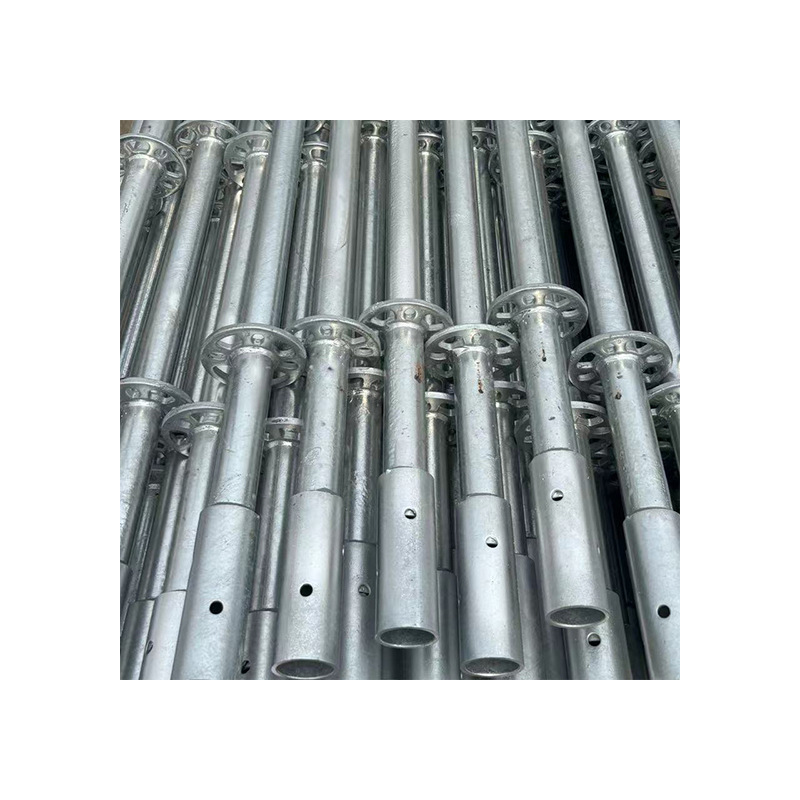
Raw steel corrodes quickly when exposed to rain, snow, and salty air. You must evaluate the surface treatment carefully. Zinc plating (electroplating) provides a thin protective layer suitable for mild climates. However, hot-dip galvanization submerges the metal into molten zinc. This creates a thick, highly durable metallurgical bond. We strongly recommend hot-dip galvanized parts for harsh weather conditions, marine environments, and industrial facilities exposed to corrosive chemicals.
Feature | Drop-Forged Steel | Pressed Steel |
|---|---|---|
Manufacturing Process | Heated and hammered into a die | Stamped and folded from sheet metal |
Tensile Strength | Exceptionally high | Moderate |
Weight | Heavier | Lighter |
Ideal Applications | Industrial, heavy masonry, long-term | Residential, light-duty, short-term |
Deformation Resistance | Excellent | Fair |
The industry currently straddles two primary methodologies: traditional tube-and-clamp methods and modern modular designs. Choosing between them dictates your labor costs, erection speeds, and overall project scalability.
Traditional setups use loose pipes and individual couplers to build structures from scratch. This method provides maximum adaptability. You can maneuver tubes around highly complex architectural shapes, awkward corners, and heritage restoration facades. Furthermore, the upfront material cost remains relatively low.
However, traditional builds present significant weaknesses. They depend entirely on highly skilled labor to measure angles and ensure grid stability. Erection times drag on significantly. Additionally, manual assembly introduces a higher risk of human error. Scaffolders might apply incorrect tightening torque to individual nuts, leading to dangerous slip risks.
Modular solutions revolutionize site efficiency. The Ringlock Scaffolding System features pre-engineered rosette joints welded directly onto the vertical standards. Workers simply slide the ledger ends into the rosette and secure them with an integrated wedge pin. This eliminates the need for thousands of loose couplers in primary connections.
The strengths are undeniable. A modular setup offers standardized, highly predictable load capacities. Sites report up to 80% faster assembly times. The fixed nodal geometry automatically locks the structure into perfect right angles, effectively building safety into the physical design itself.
Project Variables | Stick with Traditional Tube & Clamp | Invest in Ringlock System |
|---|---|---|
Structure Shape | Highly irregular, complex facades | Linear, repetitive commercial builds |
Labor Costs | Low labor rate areas | High labor rate areas (needs speed) |
Assembly Speed | Flexible timeline | Tight, rigid deadlines |
Workforce Skill Level | Experienced, specialized scaffolders | General construction labor |
Sourcing structural components requires rigorous due diligence. You cannot rely solely on glossy brochures or low quotes. Use this evaluation checklist to vet your suppliers and ensure verifiable quality control.
Never accept internal factory certificates at face value. Reputable suppliers proudly provide independent, third-party laboratory testing documentation. You must verify compliance with recognized international standards such as EN 74-1, BS 1139, or AS/NZS 1576. These standards guarantee the parts have survived brutal stress tests for slip resistance, failure loads, and physical distortion.
Every piece of structural hardware should tell a story. Authentic components feature stamped manufacturer marks deeply embedded in the metal. You should also look for production years and standard compliance codes (like EN 74). Traceability allows site managers to conduct proper visual inspections. It also provides a clear chain of liability if an accident ever triggers an official investigation.
Quality assurance cannot be random. Ask potential suppliers specific questions about their daily factory operations. Do they conduct rigorous thread testing on their T-bolts? Can they provide slip-test documentation for recent production runs? What are their documented defect rates? A trustworthy manufacturer utilizes statistical process control to catch faulty units long before they reach a shipping container.
Scaffolding fittings serve as the critical link between smooth project efficiency and catastrophic structural failure. Even the strongest steel tubes become hazardous without reliable, precision-engineered connections holding them in place. From load distribution to material choices like drop-forged steel, every detail impacts your site's safety.
To optimize your future operations, take the following actionable steps:
Audit your current inventory to identify and discard any rusted, deformed, or stripped components immediately.
Verify that your procurement team strictly requires third-party EN 74 or BS 1139 certifications for all new purchases.
Evaluate the labor costs on your upcoming repetitive builds to see if transitioning to advanced modular platforms makes financial sense.
Do not leave your site safety to chance. Request a technical consultation with an engineering expert today. Download comprehensive load-capacity spec sheets, and contact your dedicated sales team to secure certified, high-performance procurement solutions for your next major build.
A: EN 74 classifies couplers by their tested load-bearing capacities. Class A fittings support standard slip loads, making them suitable for general construction and light duties. Class B fittings undergo much stricter testing to support significantly higher slip and failure loads. Engineers specify Class B for heavy-duty commercial applications, high-rise builds, and areas experiencing severe wind forces. Always review your project engineering designs to select the correct class.
A: Yes, you frequently can. While a modular platform is largely self-contained, builders often use traditional couplers to add custom diagonal bracing, secure complex structural tie-ins, or bridge awkward architectural gaps safely. You must ensure the tube outside diameters match perfectly—typically 48.3mm. Always consult your site engineer before mixing systems to guarantee the hybrid connection maintains its certified structural load capacity.
A: Conduct thorough visual inspections before every single assembly process. Look carefully for stripped T-bolt threads, severe surface rust, and physical distortion of the clamp body. Discard the component immediately if you find structural deformation. Well-maintained, hot-dip galvanized forged parts can last over a decade. Proper dry storage, careful handling, and routine batch testing greatly extend their safe operational lifespan.
A: Tightening torque directly dictates the frictional slip resistance of the joint. Safety standards typically mandate tightening standard couplers to exactly 50 Nm. Over-tightening causes severe damage to the T-bolt threads and weakens the clamp body. Under-tightening drastically increases the risk of the steel tube slipping downward under heavy loads. Site managers should routinely enforce the use of calibrated torque wrenches during erection procedures.


