


Tel: +86-131-8042-1118
E-mail:
E-mail:
26 Huanghai Road, Leting Economic Development Zone, Hebei Province, China


Views: 0 Author: Site Editor Publish Time: 2026-07-06 Origin: Site


Scaffolding procurement carries massive stakes for any active construction site. You rely on these critical joints to hold complex temporary structures together under extreme environmental loads. A single failure here often triggers catastrophic safety incidents and immediate project shutdowns. Procurement managers can no longer rely on generic safety guidelines. Evaluating Scaffolding Fittings requires facing tough project realities directly. You must constantly balance upfront material costs against lifecycle durability. Structural hazards multiply rapidly when teams settle for cheap alternatives. Slipping components invite compliance nightmares. This guide provides a highly pragmatic framework for identifying reliable scaffolding connections. You will learn how to verify manufacturer claims effectively. We will help you minimize operational risks across your entire site. We walk you through critical material standards, key connector types, and proactive inspection protocols.
Drop-forged scaffolding fittings offer superior load-bearing capacity and durability compared to pressed steel alternatives.
Authentic safety compliance requires verifiable, third-party testing certifications (e.g., EN74, BS1139, OSHA guidelines), not just self-reported data.
Surface treatments directly dictate ROI; hot-dip galvanization is the standard for high-moisture or extended outdoor construction environments.
Transitioning to modular setups like a Ringlock Scaffolding System can reduce reliance on loose fittings while increasing erection speed.
Cheap components look highly appealing on initial procurement spreadsheets. They fail miserably on active construction sites. Substandard parts introduce massive hidden costs. You face frequent replacement cycles. Rust-induced thread failure ruins thousands of units annually. This constant cycle causes severe site downtime. Workers waste hours fighting jammed nuts. Labor costs skyrocket while productivity drops.
You also absorb terrifying liability risks. Legal and financial implications crush construction firms following a structural failure. Inadequate slip resistance allows heavy working decks to sag. Distortion under load invites total collapse. Regulatory bodies issue massive fines for these violations. Insurance premiums multiply exponentially after an incident. You simply cannot afford these compounding risks.
We must redefine successful procurement criteria. A successful outcome means experiencing zero compliance delays. Inspectors should approve your structures immediately. You want maximum component reusability across multiple future projects. Connectors should survive years of abuse. Verifiable load ratings must guarantee structural safety unconditionally. Your teams deserve absolute confidence while working at height.
Double couplers serve a vital structural purpose. They connect standard vertical tubes to horizontal ledgers at exact 90-degree angles. These form the primary load-bearing grid. You must evaluate them rigorously. Look carefully for minimum slip load capacities. Assess the wrap-around strength of the main body. A weak body distorts under pressure.
Swivel couplers handle variable angle bracing effortlessly. Diagonal cross-bracing relies entirely on these specific joints. They stabilize the whole frame against wind. You must assess the central rivet strength deeply. Weak rivets snap under tension. Swivel joints must resist extreme shear forces dynamically. Site stability depends on this shear resistance.
Putlog couplers secure scaffolding boards safely. They link transom tubes to main ledgers. Sleeve couplers perform a different role. They join tubes end-to-end securely. They ensure continuous horizontal runs. Sleeve couplers rely heavily on internal friction to maintain structural alignment.
Traditional tube-and-clamp setups use thousands of loose couplers. Erection takes immense manual labor. Misplacing parts happens daily. Modern modular structures offer a better path. An integrated Ringlock Scaffolding System utilizes built-in node mechanics. This drastically reduces loose component counts. Erection speed increases significantly. However, hybrid setups always exist. You still need high-quality couplers. They secure custom tie-ins and guardrails safely.
Coupler Type | Primary Function | Key Evaluation Focus | Critical Load Handled |
|---|---|---|---|
Double (Right Angle) | 90-degree standard/ledger joints | Wrap-around strength | Slip loads |
Swivel | Diagonal cross-bracing | Central rivet durability | Shear forces |
Putlog (Single) | Securing board transoms | Clamp grip tension | Downward pressure |
Sleeve | End-to-end tube joining | Internal friction | Bending moments |
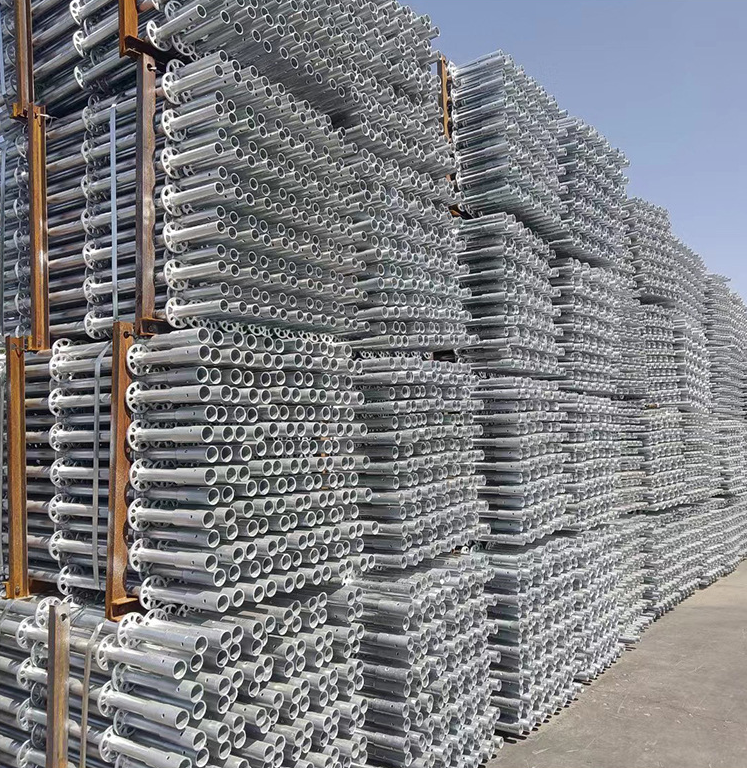
Drop-forged steel absolutely dominates the industrial scaffolding sector. Heating and hammering steel aligns its internal grain structure. This process creates immense structural integrity. Drop-forged parts rarely crack under high torque. They absorb impact energy efficiently. Pressed steel components behave differently. Manufacturers bend cold steel sheets into shape. They lack internal structural unity. Pressed variants bend easily under heavy loads. They cannot handle rigorous daily abuse. We always recommend drop-forged connections for critical load-bearing nodes.
Deeply engineered threads matter immensely on busy sites. Scaffolding teams use heavy impact wrenches constantly. Poor threads strip almost immediately. Precision-cut threads survive this repetitive mechanical abuse. They maintain their gripping profile over time. We specifically look for reinforced 21mm crossland nuts. They provide reliable, thick gripping surfaces. Workers torque them down securely. Thin nuts round off quickly. Rounded nuts trap components permanently on the tube.
Surface treatments directly determine your component lifecycle. Electro-galvanized (zinc-plated) finishes look shiny initially. The layer remains quite thin. It scratches off easily during transport. Hot-dip galvanization works much better. Factories immerse the steel directly into molten zinc. It forms a thick, metallurgically bonded barrier. Hot-dip provides ultimate protection. You desperately need this for multi-year asset lifecycles. Coastal environments destroy thin plating rapidly. Extended outdoor construction demands hot-dip durability.
You cannot guess load capacities on safety-critical equipment. Buyers must look for explicit industry benchmarks. Demand full alignment with EN 74-1 and EN 74-2 standards. These define precise slip and failure loads. BS 1139 remains a highly respected global benchmark. Ensure parts align with OSHA safety guidelines. OSHA mandates a strict four-to-one safety factor. The component must support four times its maximum intended load. Uncertified parts fail this test routinely.
Traceability protects your legal liability. Quality parts feature permanent embossed markings. You should easily identify the original manufacturer. Look closely for the production year. Verify the specific standard class marked on the body. Traceability ensures accountability. If a batch fails, the manufacturer traces the raw material flaw. Anonymous, unmarked components offer zero recourse. They represent a massive legal risk.
Assume factory certificates might be falsified initially. Fake paperwork floods the global market constantly. You must adopt a highly skeptical mindset. Request recent, independent laboratory test reports. Demand solid proof of slip resistance limits. Ask for ultimate failure load data charts. Generic factory certificates offer zero legal protection. True quality manufacturers welcome third-party audits. They provide independent SGS or TUV testing reports willingly. We advise rejecting suppliers who hesitate here.
Mixing incompatible parts creates deadly structural hazards. Tube diameters vary slightly across different global regions. Material grades differ significantly between manufacturers. A slight mismatch compromises overall structural integrity heavily. Heavy loads exploit these weak joints quickly. Standard 48.3mm outside diameter tubes require perfectly matched clamps. Using metric clamps on imperial tubes reduces grip tension dramatically. You must audit your inventory for absolute uniformity.
Site implementation presents entirely different challenges. Crews over-tighten nuts constantly to feel "safe". Even premium components fail under massive torque abuse. Impact wrenches sheer off bolts completely. T-bolts snap under excessive tension. You must actively standardize your torque tools. Provide mandatory installation training frequently. Teach crews proper tension limits. Implement smart torque wrenches. They click audibly once reaching the correct tightness. This prevents mechanical fatigue.
Incoming inventory needs strict, systematic checks. Deploy a standardized protocol before sending parts to site. We strongly recommend this brief checklist:
Check hinge movement: The body must swing open smoothly. Stiff hinges slow down erection times.
Inspect uniform galvanization: Look closely for bare metallic spots. Reject parts showing early oxidation signs.
Verify thread integrity: Nuts should spin freely by hand initially. Gritty threads indicate poor machining.
Confirm permanent markings: Ensure the manufacturer logo and standard class remain fully legible.
Evaluate core manufacturing capacity first. Determine if they can handle your specific volume reliably. Ask about their daily tonnage output. Visit their QA/QC lab physically if geographically possible. A missing internal lab indicates extremely poor quality control. Check their historical export history carefully. Experienced exporters understand strict global compliance standards deeply. They navigate customs paperwork efficiently. Ask for regional client references. Call those references to verify delivery timelines.
Never buy blind bulk containers based on photos. Procure a small initial batch first. Run localized destructive testing independently. Hand these samples directly to your scaffolding crew. Gather their immediate field feedback. Workers notice poor threading instantly. They recognize awkward hinge designs immediately. Local testing uncovers hidden manufacturing flaws early. This small upfront step protects your larger capital investment securely. It prevents delivering a container of useless scrap to your site.
Scaffolding connections act as critical safety assets on every project. They are never disposable commodities. Prioritizing quality here prevents catastrophic site failures and protects human lives daily. Focus your procurement strategy exclusively on drop-forged, certified components. Ensure transparent manufacturing data backs every purchase.
Audit your current inventory immediately. Identify any unmarked or severely rusted units. Isolate them from active deployment circulation. Request detailed technical specification sheets from your current suppliers. Scrutinize their independent testing data thoroughly. If their answers seem vague, contact a certified scaffolding specialist today. Discuss your custom project requirements openly. Taking decisive action now secures your construction site for years.
A: The core difference lies in their proven load-bearing capacity. Class A fittings handle standard structural loads adequately. Class B fittings undergo stricter testing. They support significantly heavier loads and higher slip resistance demands. Engineers specify Class B components for demanding industrial environments and complex structural supports.
A: Conduct visual inspections before every single erection cycle. Look for deep thread wear, severe impact distortion, and stiff hinges. Retire the component immediately if rust penetrates the base metal. You must also replace units if the locking nut no longer spins freely by hand.
A: Yes. Most modern modular systems utilize standard 48.3mm outer diameter tubes. High-quality couplers fit these perfectly. You frequently need them for securing custom tie-ins, adding specialized guardrails, or bridging awkward gaps where standard modular ledgers cannot reach.
A: Drop-forged steel offers far superior tensile strength and ductility. Forging aligns the internal grain structure under immense pressure. Cast iron remains brittle by comparison. Cast components shatter under sudden impacts or severe over-tightening. Drop-forged parts simply stretch or deform slightly, offering better safety margins.


