


Tel: +86-131-8042-1118
E-mail:
E-mail:
26 Huanghai Road, Leting Economic Development Zone, Hebei Province, China


Views: 0 Author: Site Editor Publish Time: 2026-06-23 Origin: Site


Commercial construction relies heavily on temporary access structures to keep projects moving. High labor costs and tight project timelines make efficiency absolutely essential on site. At the same time, onsite safety remains the ultimate priority for every site manager and contractor.
Improper assembly of a Scaffolding System frequently leads to structural failure, steep regulatory fines, and expensive project delays. Traditional methods like tube and clamp setups or raw wooden structures simply lack the standardized safety inherent in engineered frameworks. They leave too much room for dangerous human errors during assembly.
You need a systematic approach to pre-build evaluation, careful component selection, and standardized erection protocols. Modern modular systems eliminate guesswork and ensure reliable load-bearing capacity. This guide will show you how to execute a compliant, structurally sound build from the ground up.
Successful scaffold erection begins in the procurement and site-prep phases, not when materials arrive on site.
Selecting an engineered framework, such as a Ringlock scaffolding system, reduces labor time and standardizes load-bearing safety.
Strict adherence to manufacturer technical manuals and local compliance regulations (e.g., OSHA/EN standards) is non-negotiable for commercial deployment.
System stability relies entirely on precise base leveling and correct diagonal bracing execution.
Upgrading your access equipment yields immediate operational benefits. Modern modular scaffolding transforms how crews handle temporary structures. You gain speed, safety, and reliability across your entire project portfolio.
Time is your most expensive resource. Traditional tube and fitting setups require intense manual labor. Crews must measure angles, align loose tubes, and tighten individual clamps. This process drains hours from the project schedule.
Modular systems change this dynamic entirely. Standardized components snap together quickly. Fixed nodes dictate the exact angles for horizontal and vertical connections. Your erection crews simply drop wedges into slots and secure them. This streamlined process cuts assembly time dramatically.
Standardized equipment lowers the learning curve for your workers. New crew members learn modular assembly much faster than traditional methods. They recognize standard parts instantly.
Inventory management also improves. Traditional systems use hundreds of loose clamps and specialized fittings. Workers easily lose them. Modular systems use unified pieces. Fewer missing parts means fewer delayed builds. Your operational returns become highly predictable when you standardize your gear.
Human error causes most construction failures. Modern modular systems limit these errors through intelligent design. The connection points remain completely fixed. A worker cannot accidentally attach a horizontal ledger at a dangerous 45-degree angle.
Below is a comparative summary chart illustrating the operational differences between systems:
Feature Focus | Modular System Scaffold | Traditional Tube & Clamp |
|---|---|---|
Connection Speed | High (Fixed wedge/rosette locking) | Low (Manual clamp tightening) |
Error Margin | Minimal (Angles are pre-engineered) | High (Relies on worker precision) |
Training Curve | Short (Intuitive part recognition) | Steep (Requires extensive experience) |
The market offers several modular options. However, one specific framework consistently outperforms the rest in commercial applications. Let us examine why professionals prefer this architecture.
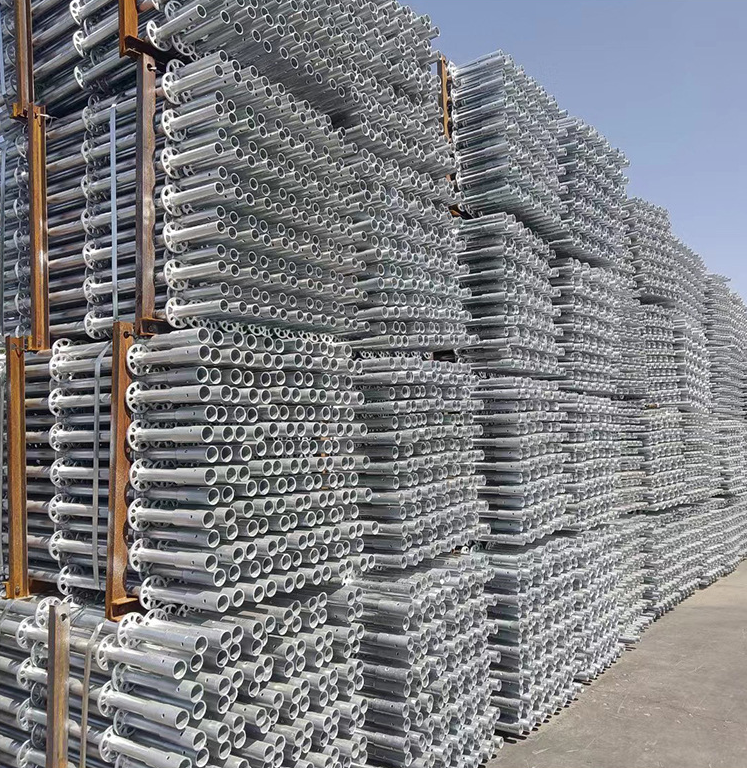
The Ringlock Scaffolding System utilizes a highly engineered rosette-and-wedge mechanism. Each vertical standard features circular rosettes welded at specific intervals. A single rosette can accept up to eight independent connections.
Compare this to Cuplock systems, which rely on sliding top cups, or Kwikstage systems using V-pressings. The rosette design provides superior rigidity. The wedge locks tightly into the rosette hole. This creates an incredibly rigid node point capable of transferring massive loads.
Commercial projects rarely feature perfectly flat, straight walls. You frequently encounter complex geometries. You might need to wrap an industrial boiler or contour around a curved building facade.
Ringlock handles these geometric challenges easily. The eight-hole rosette allows you to push ledgers out at varying angles. You maintain exceptional structural integrity while adapting to tight industrial spaces.
How do you choose the right configuration? You must evaluate your specific project parameters. Use this criteria framework:
Project Type: Simple facade work requires standard bay lengths. Heavy-duty shoring requires tighter spacing and reinforced verticals.
Budget Constraints: Factor in the speed of assembly, not just the raw material cost.
Required Load Classes: Ensure your chosen manufacturer certifies their components for the precise loads your trades will apply.
Success starts long before the delivery truck arrives. Proper site preparation determines the ultimate safety of your entire structure. Never skip these engineering fundamentals.
Your structure is only as strong as the earth below it. You must evaluate local soil conditions meticulously. Soft soil or muddy terrain will collapse under industrial weight.
You must use proper sole boards. These thick wooden or composite planks distribute the intense point loads from the vertical standards over a wider area. Calculate your total foundation load requirements early. Consult a structural engineer if the ground seems compromised.
Before selecting components, define the specific duty rating for the working bays. Industry standards classify these ratings strictly:
Light Duty: Supports 25 pounds per square foot (psf). Ideal for inspections, painting, or light tool usage.
Medium Duty: Supports 50 psf. Best suited for bricklaying or plastering where material staging is necessary.
Heavy Duty: Supports 75 psf. Required for massive masonry work or heavy industrial piping installation.
Select your transoms, ledgers, and decking based strictly on these classifications.
Walk the site thoroughly. Map out all overhead hazards immediately. Power lines present severe electrocution risks. You must maintain strict clearance distances required by local regulations.
Identify safe access and egress points. Determine exactly where delivery trucks will drop the materials. Staging materials logically prevents unnecessary onsite transport. It keeps the workspace clear and organized.
Note: This section serves as an operational overview for site managers. It is not a basic DIY tutorial.
Systematic execution prevents catastrophic failures. Follow this standardized protocol to ensure a compliant, stable build.
Begin by laying out your sole boards precisely. Position your adjustable screw jacks in the center of the boards. Next, slide the base collars down onto the screw jacks.
You must laser-level this foundational bay. This is a critical step. Do not add vertical mass until the base is perfectly level. Even a minor discrepancy at the base multiplies into a massive, dangerous lean at higher elevations.
Once the base collars are level, insert your standard verticals. Secure the horizontal ledgers between these standards. Drop the wedges into the rosettes, but do not hammer them tight just yet.
You must square the base first. Use a tape measure to check the internal diagonals of the bay. If the two diagonal measurements match exactly, the base is perfectly square. Now, hammer the wedges tight. This ensures vertical alignment for all subsequent tiers.
A scaffold cannot survive wind or live loads without proper bracing. Integrate diagonal braces immediately. These components prevent structural sway. They stop dangerous torsional twisting across the frame.
Secure your modular steel planks over the ledgers or transoms. Ensure the deck locks down completely. You must enforce zero gap tolerances. Even small gaps between planks create severe tripping hazards for workers carrying heavy tools.
Fall protection saves lives daily. Install passive fall protection systems at every single working level. Regulatory standards require top rails, mid rails, and toe boards.
Guardrails prevent fatal falls. Toe boards sit directly on the deck surface. They prevent dropped hammers or bolts from striking personnel working on the ground below. Never hand over a structure missing these components.
Building the structure is only half the battle. You must manage ongoing compliance and daily inspections to maintain site safety.
Regulatory bodies like OSHA enforce strict oversight rules. Erection, modification, and dismantling must occur under the direct supervision of a certified professional. This "Competent Person" possesses the training to identify existing hazards. They carry the legal authority to halt unsafe work immediately.
Do not allow untrained laborers to alter the structure. Even minor modifications require expert approval.
Implement a rigid tagging system onsite. This communicates the structure's status instantly.
Green Tags: The structure is fully compliant and safe for all general use.
Yellow Tags: The structure requires caution. Workers might need active fall arrest harnesses to enter.
Red Tags: Do not use. The structure is currently under construction or dismantling.
Mandate daily shift inspections. The designated inspector must check wedge locks physically. They must verify vertical plumbness. They must confirm complete decking integrity before anyone climbs the stairs.
Real-world environments introduce specific risks. Watch out for these common mistakes:
Mixing incompatible components from different manufacturers causes immediate danger. Even if parts look similar, their metallurgical properties differ. Mixing them voids manufacturer warranties and ruins structural testing limits.
Unauthorized onsite modifications happen often. A plumber might remove a diagonal brace to fit a pipe. This compromises the entire bay. Finally, overloading platforms beyond their designated duty rating causes immediate deflection and eventual collapse. Monitor material staging closely.
Building a commercial access structure is a highly engineered process. It requires the precise alignment of the right equipment, skilled labor, and strict regulatory compliance. Cutting corners during foundation layout or ignoring load limits leads directly to failure.
Take action today to secure your job sites. Audit your current access inventory to identify damaged or obsolete parts. Consult with structural engineers early when planning your upcoming complex builds. Finally, request a detailed quote and technical manual for a certified modular system to upgrade your onsite capabilities safely.
A: A modular system uses prefabricated, engineered components with fixed connection points like rosettes and wedges. Traditional scaffolding uses loose steel tubes and individual friction clamps. Modular setups assemble much faster and limit human error, whereas traditional methods require meticulous manual measuring and tightening at every joint.
A: Erection time depends on site conditions and crew size. Generally, a trained crew of three can erect up to 300 square feet of simple modular facade access per hour. This represents a massive efficiency gain compared to traditional tube and fitting methods, which often take twice as long.
A: No. You should never mix components from different manufacturers. Doing so automatically voids manufacturer warranties and violates engineered structural testing limits. Even minor millimeter differences in wedge thickness or rosette spacing will cause catastrophic point-load failures under heavy industrial stress.
A: Systems are generally rated as light-duty (25 psf), medium-duty (50 psf), or heavy-duty (75 psf). Light duty supports workers and small tools. Medium duty supports bricklaying staging. Heavy duty handles massive masonry loads. Your exact component choice and bay spacing must match the intended load class.


