


Tel: +86-131-8042-1118
E-mail:
E-mail:
26 Huanghai Road, Leting Economic Development Zone, Hebei Province, China


Views: 0 Author: Site Editor Publish Time: 2026-06-30 Origin: Site


Scaffolding failures frequently trace back to inadequate lateral bracing. Many accident reports also cite substandard component quality. When temporary structures collapse under pressure, a missing or weak diagonal support is often the primary culprit.
A Ringlock diagonal brace plays a critical role in resisting shear forces. It effectively manages high wind loads across open construction environments. This component maintains the strict geometric integrity of every scaffold bay. Without it, standard vertical members risk severe bending or hazardous lateral sway under dynamic loads.
This article provides an objective, technical framework for project managers and procurement officers. We will explore how to properly evaluate, size, and source these vital components. You will learn the exact specifications required to meet strict safety compliance standards. Carefully selecting your scaffolding materials prevents structural failure and keeps your workforce safe.
Construction sites represent highly dynamic environments. Scaffolding structures face constant shifting loads from personnel, heavy materials, and unpredictable weather. The core business problem you face is preventing lateral sway. Preventing structural collapse under these conditions requires rigid support mechanics.
Diagonal braces solve this instability. They work in tandem alongside vertical standards and the horizontal Ringlock ledger. Together, these components create a highly rigid, load-bearing triangulated structure. Triangulation distributes forces evenly across multiple points. It effectively stops the rectangular scaffold bays from skewing or collapsing laterally.
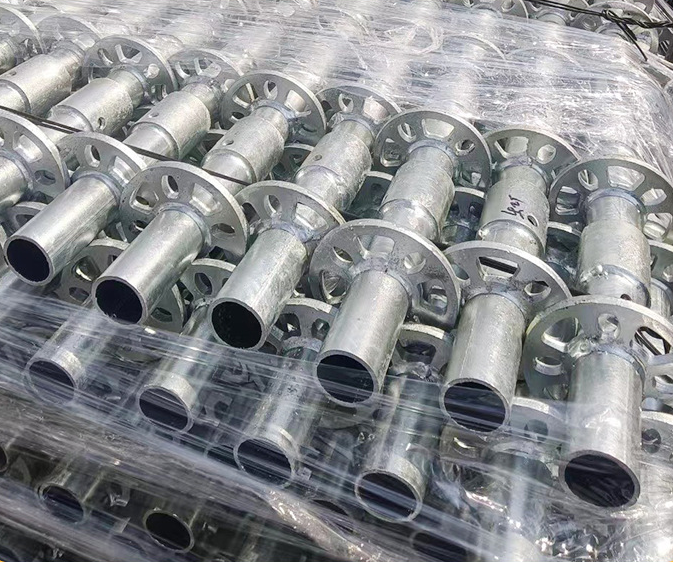
The standard rosette design drives this synergy. If you examine a rosette, you will notice smaller and larger holes. Engineers designed the small holes for ledgers attaching at exact 90-degree angles. Conversely, the larger or slotted holes accommodate diagonal braces. These wider openings allow scaffolders to attach braces at various angles. This flexibility accommodates different bay lengths and lift heights smoothly.
Ignoring this engineering precision introduces severe failure risks. Using mismatched or lightweight braces compromises the entire system. Mismatched components prevent the wedge pin from seating fully into the rosette. Loose connections eventually cause structural deformation. A single loose brace shifts excess weight onto neighboring ledgers, creating a dangerous domino effect across the structure.
Procuring reliable scaffolding requires looking beyond basic dimensions. You must evaluate the underlying metallurgy and manufacturing quality. We break down the core specifications below.
Manufacturers typically use two main steel grades for tubular scaffolding components: Q235 and Q345. Q235 represents standard low-carbon steel. It serves well for basic, low-height applications. Q345 represents a high-strength, low-alloy steel. It provides significantly higher yield strength. High-strength steel resists buckling under extreme compression forces.
Tube diameter and wall thickness also dictate capacity. Braces generally feature either 42.2mm or 48.3mm outside diameters. Wall thicknesses range from 2.5mm to 3.2mm. A larger diameter dramatically increases compression capacity. Thicker walls resist denting from heavy impacts.
However, we must check a common assumption. Thicker steel does not always equal better performance if the steel grade remains low. You must evaluate the yield strength-to-weight ratio. A heavy, thick Q235 tube adds massive dead weight to the scaffold foundation. A slightly thinner Q345 tube offers higher strength while keeping the overall structure lighter. Lighter components also reduce worker fatigue during assembly.
| Steel Grade | Yield Strength (MPa) | Tensile Strength (MPa) | Best Application Scenario |
|---|---|---|---|
| Q235 | 235 | 370 - 500 | Low-rise structures, interior scaffolding, temporary access platforms. |
| Q345 | 345 | 470 - 630 | High-rise commercial builds, heavy industrial load-bearing, coastal sites. |
Scaffolding materials face harsh outdoor exposure constantly. Rain, salt air, and chemical exposure degrade raw steel rapidly. We strongly advocate for Hot-Dip Galvanizing (HDG) over painted or electro-galvanized finishes.
The HDG process submerses the steel tube into molten zinc. This creates a metallurgical bond. The zinc layer protects the steel from rusting. It prevents internal corrosion inside the tube cavity. Electro-galvanizing only provides a thin surface layer. It scratches easily and rusts quickly on industrial sites.
You should specify zinc coating thickness standards during procurement. Aim for a coating thickness greater than 80 microns. This specification ensures a prolonged lifespan. It proves especially vital in harsh coastal environments or chemical plants.
The connection points bear massive stress. You must evaluate the cast steel ends tightly. These brace heads require precision casting. Precision ensures a perfectly flush fit against the vertical standard. Any gap between the cast head and the standard introduces wobble.
You must also verify the wedge pin assembly. Quality manufacturers secure wedge pins using heavy-duty rivets. These anti-drop designs prevent component loss during transit. Loose pins fall out easily. Lost pins delay installation schedules and force workers to improvise dangerous fixes.
Best Practice: Always inspect the cast head for porosity. Small holes in the casting indicate weak metal. These heads will crack when struck by a hammer during assembly.
Purchasing the wrong size brace wastes thousands of dollars. It causes severe on-site assembly delays. Scaffolding teams cannot simply force a mismatched brace into a bay.
The dimension matrix dictates sizing strictly. Two specific variables determine the exact length of your diagonal brace. First, you measure the Bay Length. This represents the horizontal distance between two vertical standards. Second, you measure the Lift Height. This represents the vertical distance between two rosettes on the same standard.
Using these two numbers, manufacturers calculate the exact diagonal hypotenuse. Instruct your buying team to verify measurements correctly. You must measure from the center of one rosette to the center of the opposite diagonal rosette. Measuring from the edge of the tube will yield incorrect dimensions.
Reputable manufacturers often use color-coded brace ends. Sometimes they use brightly colored labels. Color coding helps scaffolders quickly identify lengths on-site. When sorting through hundreds of steel tubes, a blue tag instantly signals a 2.0m x 2.0m brace. This simple system reduces labor hours dramatically. It prevents workers from carrying the wrong brace up multiple levels.
Scaffold stability requires support across multiple planes. Planners often confuse vertical diagonal bracing with horizontal plan bracing. Each serves a distinct structural purpose.
Diagonal braces operate on the vertical plane. Workers install them on the outer face of the scaffold. They provide essential vertical stability. These tubes resist lateral shear forces. When heavy winds hit the side of a building, the vertical diagonals transfer that force safely down into the ground.
Plan braces operate on the horizontal plane. Installers often call them horizontal diagonal braces. They connect horizontally across the scaffold bay. Plan braces ensure the scaffold structure maintains its strict square shape. Without them, a rectangular bay can easily twist into a parallelogram under torsional loads.
Your project engineers dictate the decision logic. A standard straight facade run usually requires only exterior diagonal bracing. The existing building face provides horizontal rigidity. However, complex structures require horizontal plan bracing. Birdcage scaffolds, mobile towers, and freestanding load-bearing towers must integrate plan braces. Complex geometric loads demand multi-planar triangulation to prevent collapse.
Sourcing reliable components demands strict quality control. You cannot rely on visual inspections alone. Use this robust procurement checklist to shortlist qualified scaffolding suppliers.
You must also address interchangeability and precise tolerances. Mixing scaffolding brands introduces massive risks. Millimeter variances exist between different manufacturers. A brace head from Supplier A might not fit properly into the rosette hole from Supplier B.
If you are sourcing braces for an existing fleet, mandate a trial assembly test. Ship a sample of your current standards to the new supplier. Ensure the new brace heads fit your existing rosette holes smoothly. Workers should never need forceful hammering to seat a wedge pin. Heavy sledging damages the cast head and weakens the connection.
Common Mistake: Approving a bulk order based solely on a single golden sample. Always demand batch testing reports right before the final shipment loads into the container.
Sourcing the cheapest Ringlock diagonal brace often results in expensive hidden costs. You will face severe installation delays when components refuse to align. Failed safety audits will halt your project entirely. Substandard steel ultimately introduces unacceptable structural risks to your job site.
Decision-makers must prioritize precise engineering and quality materials. Focus strictly on correct dimensions and verify your steel grades. Demand Q345 steel for heavy applications. Insist on thick HDG finishes for maximum weather protection.
Following these technical guidelines ensures long-term ROI. High-quality scaffolding components last for decades across multiple rigorous projects. Most importantly, prioritizing quality guarantees uncompromised site safety for every worker stepping onto the platform.
A: We generally discourage mixing brands. Millimeter variances exist in rosette hole sizes and cast head geometry. These small differences lead to loose connections or excessive joint wear. You should only mix brands if the manufacturer explicitly guarantees compatibility with your specific existing system.
A: Your scaffold design and engineering plan dictate the exact number. However, a common rule of thumb requires one continuous diagonal brace line for every five horizontal bays. This requirement frequently changes based on local load class ratings and expected wind exposure.
A: Incorrect sizing causes most alignment issues. You likely have the wrong bay-to-lift ratio. Bent vertical standards or concrete debris inside the rosette hole also block the connection. Never force a wedge pin using heavy sledgehammers. This impact severely compromises the cast head integrity.
A: Ringlock systems utilize tubular steel braces featuring cast ends and wedge pins. These integrate seamlessly into rosettes. Tubular designs offer superior multi-directional load resistance. Traditional frame scaffolding uses flat angle iron cross braces, which handle less compression force and lack the rigid node connections of modern systems.

