


Tel: +86-131-8042-1118
E-mail:
E-mail:
26 Huanghai Road, Leting Economic Development Zone, Hebei Province, China


Views: 0 Author: Site Editor Publish Time: 2026-07-11 Origin: Site


Outdoor scaffolding demands uncompromising structural integrity. Wind loads, harsh weather, and heavy dynamic weights place enormous stress on temporary structures. Traditional tube-and-clamp systems often struggle to meet these severe environmental tolerances safely. Today, enterprise and municipal projects rapidly shift toward modular ringlock configurations. They offer superior stability and significantly faster erection times. Procurement and site managers need an evidence-based framework to evaluate these systems properly. You must assess them based on strict compliance, material integrity, and long-term durability. This article breaks down the essential criteria for selecting robust galvanized equipment. We will explore material baselines, certification benchmarks, and critical component evaluations. You will learn how to verify supplier claims and avoid costly procurement traps.
Unpredictable weather and salt-air corrosion constantly threaten temporary structures. Rough handling on active job sites rapidly degrades painted or electro-galvanized equipment. These inferior coatings chip easily and expose raw steel to moisture. This leads to frequent replacement cycles and severe safety hazards. Workers rely on stable platforms, and rusted joints compromise that fundamental safety.
Hot-dip galvanization provides a permanent metallurgical bond rather than a fragile surface coating. During the dipping process, zinc alloys directly into the steel substrate. It forms a robust barrier against external elements. This heavy-duty coating actually self-heals minor scratches through galvanic action. It also coats the inside of the tubes, resisting internal rust where site inspectors cannot easily see.
Evaluating the true value of your investment requires looking past the initial purchase price. The upfront premium for high-grade galvanization pays off rapidly over time. You gain significantly reduced maintenance burdens and faster assembly times. High-quality systems deliver a 15 to 20-year asset lifespan. By eliminating frequent replacements, companies protect their capital budgets and keep projects moving efficiently without unexpected equipment failures.
Not all scaffolding steel offers the same performance. Buyers must distinguish between different steel grades to ensure structural safety. Q235 steel remains perfectly acceptable for ledgers and horizontal members. However, load-bearing vertical sections demand much higher yield strength. You must mandate Q345 or Q355 steel for these critical vertical components. Using inferior steel for uprights invites catastrophic buckling under heavy dynamic loads.
Galvanization metrics also require strict verification. To survive long-term outdoor exposure, you need verifiable thickness data. Industry benchmarks demand a zinc coating thickness averaging 80 to 85 microns. This specific level complies with established ISO 1461 and ASTM A123 guidelines. Anything less risks premature degradation in coastal or industrial environments.
Global certification benchmarks provide a necessary regulatory lens for buyers. You should look for systems adhering to a comprehensive ringlock scaffold standard. Here is a checklist of regulatory benchmarks you must verify during procurement:
You must maintain transparent assumptions during procurement. A "certified" system is only as reliable as its most recent batch test. Manufacturers can change material sources between production runs. Always demand up-to-date documentation to ensure ongoing compliance.
| Component Type | Minimum Steel Grade | Galvanization (Microns) | Primary Function |
|---|---|---|---|
| Vertical Upright | Q345 / Q355 | 80 - 85 | Primary load-bearing structural support |
| Horizontal Ledger | Q235 | 80 - 85 | Lateral connection and working platform support |
| Diagonal Brace | Q195 / Q235 | 80 - 85 | Preventing structural sway and twisting |
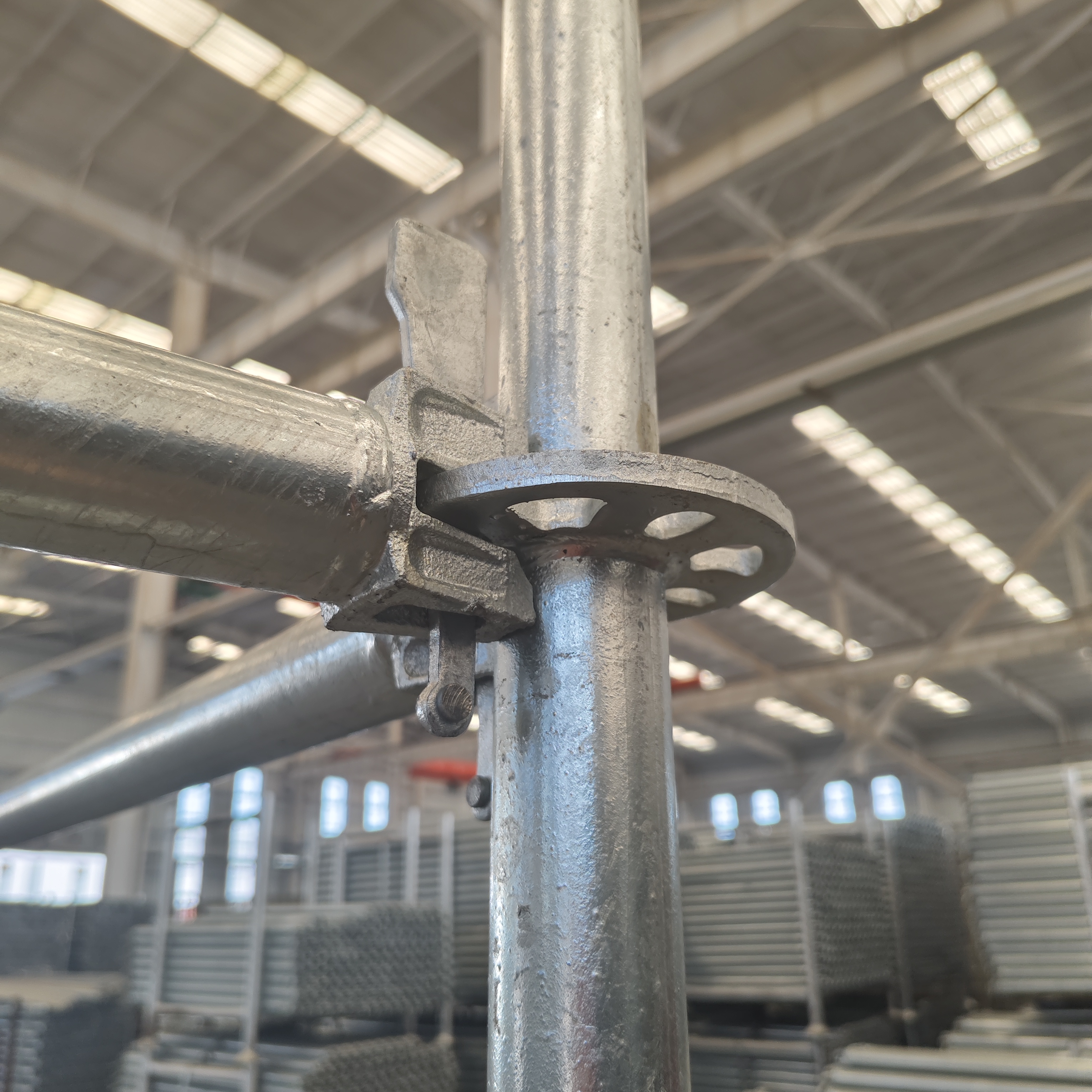
The vertical foundation dictates the overall stability of the temporary structure. A robust Ringlock standard features precisely engineered physical dimensions. Typical components feature rosette spacing at exact 500mm intervals. The main tube diameter strictly measures 48.3mm across the industry. Wall thickness tolerances remain absolutely critical, usually requiring a 3.2mm specification for high-load environments.
Rosette integrity directly relies on exceptional weld quality. Manual welding introduces dangerous inconsistencies and human error. Modern manufacturing requires automated or robotic welding lines. Deep penetration ensures the rosettes will not shear off under extreme loads. If a rosette fails, the entire structural node collapses, risking severe site accidents.
Specialized accessories must interact safely with the core framework. Sometimes, you need to bridge unusual gaps or add non-standard bracing. This requires integration using a highly reliable Scaffolding coupler. You must evaluate the necessity of EN74-compliant drop-forged couplers. These specialized fittings handle complex building ties and secure custom facade mesh easily. They perform these tasks without weakening the primary structure. They maintain system integrity while offering necessary flexibility on complex architectural geometries.
When assessing physical components, follow this practical checklist:
Global supply chains present significant traceability risks for procurement teams. The market currently faces an influx of white-labeled, sub-standard imports. These products often mimic premium systems visually but fail catastrophically under stress. You must look beyond glossy catalogs to verify actual factory capabilities and raw material sourcing.
Evidence-oriented verification filters out dangerous suppliers effectively. Procurement teams must request Mill Test Certificates (MTCs) for every production batch. These documents verify the precise chemical composition of the raw steel. You should analyze the levels of Carbon, Silicon, and Manganese to confirm strength properties. Furthermore, you must review third-party destructive load test reports. Agencies like SGS or TUV provide independent validation of structural load claims.
Implementation considerations go far beyond basic factory quality checks. Tolerance issues create severe on-site hazards during assembly. You face massive risks with "mixed-fleet" scaffolding. When you mix components from different manufacturers, they rarely align seamlessly. Minor dimensional differences cause wedge-pin jamming. This forces workers to hammer pins aggressively, damaging the galvanization layer. Worse, mixed components create hidden structural weaknesses that compromise safe load capacities.
Selecting the right supplier requires a disciplined and objective evaluation matrix. Comparing quotes solely on the bottom line is extremely dangerous. You must create a rapid framework to weigh multiple critical variables. Compare the bid price against total weight, steel grade, galvanization thickness, and verified independent certifications.
Beware of the dangerous weight-to-price trap. Some suppliers quote by the piece rather than by total material weight. They might undercut competing bids by using thinner walls, such as 2.75mm instead of the mandatory 3.2mm. This drastically reduces the steel volume and severely compromises structural safety. Always demand pricing metrics tied directly to confirmed material weight.
| Evaluation Criteria | Sub-Standard Supplier Indicators | Premium Manufacturer Indicators |
|---|---|---|
| Pricing Model | Priced strictly by the individual piece | Priced by verifiable documented weight |
| Wall Thickness | Variable or thin (2.5mm - 2.75mm) | Strictly 3.2mm for structural Standards |
| Welding Method | Manual, irregular, and inconsistent | Automated/Robotic, uniform deep penetration |
| Documentation | Internal unverified certificates only | Third-party TUV/SGS destructive test reports |
To finalize your procurement process, take these actionable next steps:
Evaluating outdoor scaffolding serves primarily as a strict risk-mitigation exercise. It is far more than a simple operational purchasing task. Adhering strictly to established material, welding, and galvanization guidelines protects site workers fundamentally. It also safeguards the financial health and reputation of the project.
You secure long-term value by refusing to compromise on component integrity. Sub-standard imports introduce hidden liabilities that surface suddenly during severe weather or heavy load stages. We urge you to audit your current suppliers immediately. Compare their deliverables against the compliance metrics and lifecycle expectations outlined above. Taking these definitive steps ensures structural safety and continuous project success.
A: The industry baseline for severe outdoor exposure is an average zinc coating thickness of 80 to 85 microns. This standard complies with ISO 1461 and ASTM A123. It ensures the steel resists aggressive weather, salt-air corrosion, and daily on-site abrasions effectively.
A: Mixing components creates severe safety risks and liability issues. Even if both brands claim to meet identical standards, slight manufacturing tolerances differ. This causes wedge-pin jamming and prevents seamless load transfer. Always stick to a single-manufacturer system to ensure structural integrity.
A: You must request Mill Test Certificates (MTCs) for every batch. These documents confirm the exact chemical composition, including Carbon and Manganese levels. Additionally, commission independent metallurgical testing from agencies like SGS or TUV to validate the factory's claims.
A: Traditional drop-forged couplers are necessary for specific edge cases. You need them when installing building ties, securing custom facade mesh, or adapting the structure to complex, irregular architectural geometries. They allow non-standard bracing without compromising the core modular framework.

