


Tel: +86-131-8042-1118
E-mail:
E-mail:
26 Huanghai Road, Leting Economic Development Zone, Hebei Province, China


Formwork is a fundamental component in modern construction. It refers to the temporary or permanent molds used to shape and support concrete structures until they gain sufficient strength to support themselves. Formwork systems are essential in ensuring the structural integrity, precision, and efficiency of concrete projects. From residential buildings to large-scale infrastructure, formwork plays a critical role in achieving high-quality construction outcomes.
In this article, we will explore what formwork is, the types of formwork, the role of scaffolding coupler for formwork, and the use of climbing formwork in modern construction. Additionally, we will discuss how leading companies like Huabei Yiande Scaffolding Manufacture Co., Ltd. provide cutting-edge solutions in formwork and scaffolding systems.
Formwork is essentially a mold into which concrete is poured. Traditionally, it was made from timber, but today, steel, aluminum, and engineered plastic are widely used due to their durability, reusability, and precision. Properly designed formwork must withstand concrete pressure, vibration forces, and environmental factors during construction.
The main functions of formwork include:
Shaping the structure: Ensures the concrete structure attains the intended dimensions and finish.
Supporting loads: Holds the weight of wet concrete, reinforcement bars, and construction loads.
Providing safety: Enables safe construction processes for workers.
Formwork is not only a construction tool but also a key factor in project efficiency and cost control. Using modern systems reduces construction time and ensures higher-quality surfaces.
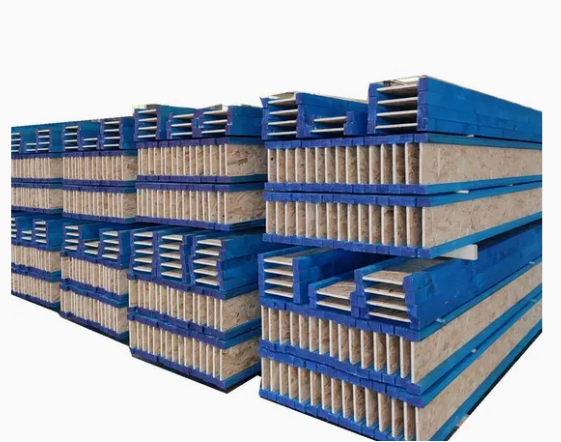
Formwork can be classified based on materials, construction method, and application. The most commonly used types include:
Timber formwork is the traditional type, usually made from softwood or plywood. It is easy to fabricate on-site but less durable and less reusable compared to modern materials. Timber formwork is mainly used in small-scale construction or where complex shapes are required.
Steel formwork is durable, reusable, and highly precise, making it suitable for large-scale or repetitive projects. Steel panels provide smooth finishes, reduce labor costs, and can be used for tall structures with minimal deformation.
Aluminum formwork is lightweight and corrosion-resistant, offering easy handling and quick assembly. It is ideal for high-rise buildings and projects that require rapid construction cycles.
Plastic or fiberglass formwork is lightweight, reusable, and resistant to moisture, often used in curved structures or water-retaining elements. They are particularly advantageous in projects requiring complex shapes and uniform finishes.
Climbing formwork is a specialized system used for high-rise construction, allowing the formwork to “climb” along with the concrete structure. This system ensures continuous construction and reduces time and labor costs. It is commonly applied in core walls, bridges, and towers.
A complete formwork system involves several components working together to ensure stability, safety, and quality:
| Component | Function | Notes |
|---|---|---|
| Formwork panels | Shape the concrete | Can be timber, steel, aluminum, or plastic |
| Scaffolding coupler for formwork | Connects and supports formwork | Provides stability and flexibility |
| Supports (props/jacks) | Hold the formwork in position | Adjustable to manage height and load |
| Tie rods & clamps | Maintain alignment and resist pressure | Essential for reinforced concrete structures |
| Safety accessories | Guardrails, ladders, and platforms | Ensure worker safety |
Among these, the scaffolding coupler for formwork plays a crucial role by securely joining different formwork and scaffolding components, ensuring structural stability while being adaptable to complex projects.
Using modern formwork, especially from a leading supplier, offers numerous advantages:
Modern formwork systems are designed for quick assembly and dismantling, significantly reducing construction time. This efficiency translates into lower labor costs and faster project completion.
High-quality formwork ensures that the concrete structure is dimensionally accurate, smooth, and ready for finishing without additional work.
Advanced formwork systems come with integrated scaffolding and safety features, protecting workers during construction.
Steel, aluminum, and high-grade plastic formwork can be reused across multiple projects, offering long-term cost savings.
Modern systems, including climbing formwork, allow construction of complex, tall, or repetitive structures with ease.
As a leading formwork and scaffolding supplier, Huabei Yiande Scaffolding Manufacture Co., Ltd. brings 33 years of expertise in production, leasing, and engineering contracting. Here’s why construction professionals prefer Yiande:
Comprehensive Solutions: From steel pipe production and formwork manufacturing to leasing and installation, Yiande provides end-to-end services.
High-Quality Products: Utilizing over 130 sets of advanced automated equipment, the company produces more than 300,000 tons of high-quality scaffolding annually.
Innovation & Standards: Yiande participates in national standard formulations and leads in buckle scaffolding quality initiatives.
Proven Track Record: Products have been used in landmark projects such as the Beijing Bird’s Nest, Tianjin Ziya River Bridge, and Alibaba Logistics Center.
Global Logistics & Support: With a complete logistics network via land, rail, and waterway, Yiande ensures timely delivery and responsive service worldwide.
Choosing Yiande means reliable formwork, efficient scaffolding systems, and professional project support from start to finish.
Formwork is widely used in both residential and commercial construction:
High-Rise Buildings: Climbing formwork enables fast and safe construction of tall cores and walls.
Bridges and Infrastructure: Specialized formwork supports complex bridges and civil structures.
Industrial Facilities: Provides durable and reusable molds for factories and warehouses.
Architectural Projects: Enables custom shapes and smooth finishes for visually appealing designs.
The integration of scaffolding coupler for formwork ensures flexibility and stability in all these applications.
To maximize efficiency, safety, and quality, construction teams should follow these best practices:
Design Before Construction: Plan the formwork layout considering loads, dimensions, and accessibility.
Use Quality Materials: Ensure panels, supports, and couplers meet strength and durability standards.
Regular Inspections: Check alignment, joints, and supports before pouring concrete.
Safety Protocols: Equip platforms with guardrails and use personal protective equipment (PPE).
Training: Skilled workers familiar with climbing and modular formwork systems increase efficiency.
Q1: What is the difference between timber and steel formwork?
Timber formwork is cheaper and easier to customize, but steel formwork is more durable, reusable, and precise, suitable for large-scale projects.
Q2: How does climbing formwork improve construction efficiency?
Climbing formwork moves along with the structure, allowing continuous concrete casting, reducing labor and construction time.
Q3: What is a scaffolding coupler for formwork?
It is a connector that joins formwork and scaffolding components, providing stability, flexibility, and load support.
Q4: Can Yiande formwork systems be used internationally?
Yes, Yiande has a complete logistics network and provides solutions for projects worldwide, supporting global clients with high-quality scaffolding and formwork.
Q5: What projects benefit most from modern formwork systems?
High-rise buildings, bridges, industrial facilities, and complex architectural structures benefit most due to efficiency, safety, and precision.


