


Tel: +86-131-8042-1118
E-mail:
E-mail:
26 Huanghai Road, Leting Economic Development Zone, Hebei Province, China


Views: 0 Author: Site Editor Publish Time: 2025-12-29 Origin: Site


Bending stainless steel pipe is a critical process in metal fabrication, plumbing, automotive engineering, marine structures, architectural tubing systems, and various industrial manufacturing fields. Because stainless steel offers excellent corrosion resistance, high strength, and a clean aesthetic finish, it is commonly chosen for structural installations, fluid transport, machine components, and decorative applications. Learning how to bend stainless steel pipe correctly ensures that the pipe maintains its structural integrity, dimensional accuracy, and long-term performance under pressure, vibration, or environmental exposure.
This comprehensive guide explains the fundamentals of stainless steel pipe bending, the differences between machines and manual tools, the influence of pipe grades and wall thickness on bending quality, and the best practices for achieving smooth bends without wrinkles, flattening, or cracking. Whether used in industrial production or small-scale workshop projects, proper bending techniques allow manufacturers and technicians to create high-precision pipe systems with reduced waste, improved consistency, and enhanced efficiency.
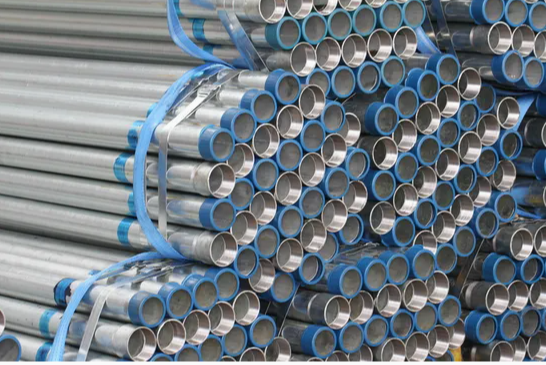
Stainless steel pipe is harder and stronger than carbon steel, aluminum, or copper, so bending requires more controlled force and more advanced tooling. Incorrect bending may lead to springback, deformation, cracking, or structural weakness. Because stainless steel pipe is widely used in pressure systems and exposed environments, the bend quality directly influences safety and longevity.
A properly bent stainless steel pipe must match the desired radius, maintain a consistent cross-section, avoid surface scratches, and preserve internal flow characteristics. High-quality bends reduce maintenance costs, minimize installation time, and meet strict engineering standards in industries such as food processing, pharmaceuticals, petrochemicals, water treatment, and construction.
Different stainless steel grades respond differently to bending. The most common grades include:
304 stainless steel – Excellent corrosion resistance, widely used, good bendability.
316 stainless steel – Higher corrosion resistance for marine or chemical environments, slightly harder to bend.
201 stainless steel – Economical with lower nickel content, more rigid, more prone to springback.
409 / 430 stainless steel – Ferritic types with unique forming characteristics.
Higher-strength stainless steel types require more powerful bending tools or larger bending radii. In general, austenitic stainless steels (304/316) are easier to bend due to their superior ductility.
The pipe’s structural dimensions play a key role:
Thin-wall pipes bend more easily but risk wrinkling or distortion.
Thick-wall pipes resist wrinkling but require greater force and may need a mandrel.
Large-diameter pipes need controlled, slow bending to prevent flattening.
Stainless steel pipe used in industrial fluid systems often requires mandrel bending to maintain internal flow characteristics.
Below are the primary bending methods used across industries, each with its own strengths depending on pipe size, precision requirements, and production volume.
Rotary draw bending is the preferred method for precision applications such as exhaust systems, architectural structures, handrails, and industrial piping. A fixed radius die guides the pipe while a rotating arm pulls it into shape. When paired with an internal mandrel, the process produces smooth bends with minimal deformation.
This method is ideal for stainless steelpipe because it offers high repeatability and clean surface finish. It supports small radius bends, tight tolerance projects, and high-volume production runs.
Compression bending uses a stationary bend die with a roller or shoe pressing the pipe into shape. This technique is suitable for thinner stainless steel pipes used for non-critical applications. Although simpler and faster, compression bending may cause mild flattening and is generally not recommended for high-precision engineering projects.
Roll bending forms large-radius curves using three adjustable rollers. It is mainly used for stainless steel pipes in storage tanks, architectural arcs, greenhouse frames, or structural rings. Roll bending does not produce tight-radius bends but provides excellent consistency for large, sweeping curves.
Because stainless steel work-hardens quickly, applying temperature to the bending zone can reduce stress, especially in thick-wall steel pipe. Heat-assisted bending must be controlled carefully to avoid altering the metallurgical structure. Specialized heating coils or induction systems maintain precise temperature ranges during bending.
Manual bending tools are useful for small-diameter stainless steel pipes in residential plumbing or lightweight fabrication. These include handheld ratchet benders, spring benders, and lever-type bending tools. While cost-effective, manual bending has limitations in accuracy and may not support thicker industrial pipes.
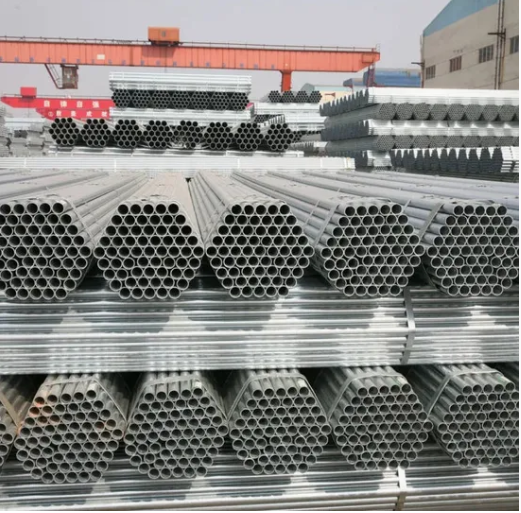
| Bending Method | Precision Level | Suitable Pipe Size | Advantages | Limitations |
|---|---|---|---|---|
| Rotary Draw Bending | High | Small to medium | Tight radius, smooth finish, high repeatability | Requires mandrel for best results |
| Compression Bending | Medium | Small | Simple, economical | Possible flattening, lower precision |
| Roll Bending | Medium | Medium to large | Ideal for large curves | Not for tight radius bends |
| Heat-Assisted Bending | High | Thick-wall pipes | Reduces stress, prevents cracking | Must control temperature carefully |
| Manual Bending | Low to medium | Small | Cost-effective, portable | Limited accuracy, for small projects |
Before bending, the stainless steel pipe must be cleaned, deburred, and measured accurately. Any imperfections may cause surface scratches or irregular bends. Measuring the required angle and radius ensures precision, especially when multiple pipes must be identical.
Whether using a rotary draw bender, roller, or manual bender, alignment is critical. The pipe should fit tightly into the die without gaps. Loose-fitting dies increase deformation risk, while overly tight dies may scar or compress the pipe.
The bending speed influences the outcome:
Slow, controlled bending ensures the pipe conforms to the die.
Consistent pressure avoids wrinkles and flattening.
Monitoring springback is essential for stainless steel—pipes naturally return slightly after bending, requiring compensatory over-bending.
Thicker stainless steel pipes require greater pressure and sometimes a mandrel or support rod to maintain the interior shape.
After bending, the pipe should be inspected for:
Roundness retention
Wall thinning
Surface condition
Accurate angle and radius
Mechanical polishing may be applied to restore finish, and pressure testing may be required for pipes used in fluid systems.
| Pipe Diameter (mm) | Minimum Bend Radius (mm) | Recommended Method | Notes |
|---|---|---|---|
| 12–20 | 60–100 | Manual / Rotary Draw | Good bendability |
| 25–32 | 120–180 | Rotary Draw | May need light lubrication |
| 40–60 | 200–300 | Rotary Draw with Mandrel | Prevents deformation |
| 63–89 | 350–600 | Roll Bending | Large radius curves |
| 100+ | 600+ | Roll Bending / Heat-Assisted | Controlled process required |
To produce excellent results when bending stainless steel pipe, technicians and manufacturers follow several proven techniques:
Keep all tooling surfaces clean and polished to avoid scratches.
Use mandrels for tight-radius bends to maintain internal geometry.
Apply consistent lubrication to reduce friction and surface damage.
Control bending speed to minimize wrinkling.
Avoid excessive heating that can change metal hardness or grain structure.
Inspect the pipe before and after bending to confirm tolerance requirements.
Use standardized dies and fixtures for repeatable production runs.
These practices ensure efficiency, accuracy, and long tool life.
At Huabei Yiande Scaffolding Manufacture Co., Ltd., we leverage over 33 years of experience in steel pipe production, scaffolding manufacturing, and project contracting. Located in Hebei Province, our modern facility, advanced equipment, and rigorous quality control enable us to deliver high-strength, durable, and precision-engineered steel pipes and scaffolding systems. Trusted by clients worldwide, our products have been used in large-scale construction projects, ensuring safety, reliability, and efficiency across every application.
1. Can stainless steel pipe be bent without a mandrel?
Yes. Small-diameter or thick-wall pipes can be bent without a mandrel, but mandrels are recommended for tight-radius bends to prevent wrinkling and flattening.
2. What is the best method for bending stainless steel pipe?
For precision applications, rotary draw bending with a mandrel is the best option. For large-radius curves, roll bending is most effective.
3. Does stainless steel crack when bent?
Stainless steel can crack if bent too tightly, bent too quickly, or bent with improper tooling. Proper radius selection and method reduce this risk.
4. Do you need heat to bend stainless steel pipe?
Not always. Heat assists bending thick-wall pipes or high-strength grades but must be controlled to avoid affecting metal properties.
5. Why does stainless steel spring back after bending?
Stainless steel has high elasticity. After bending, it naturally returns slightly toward its original shape. Compensation by over-bending is required.


